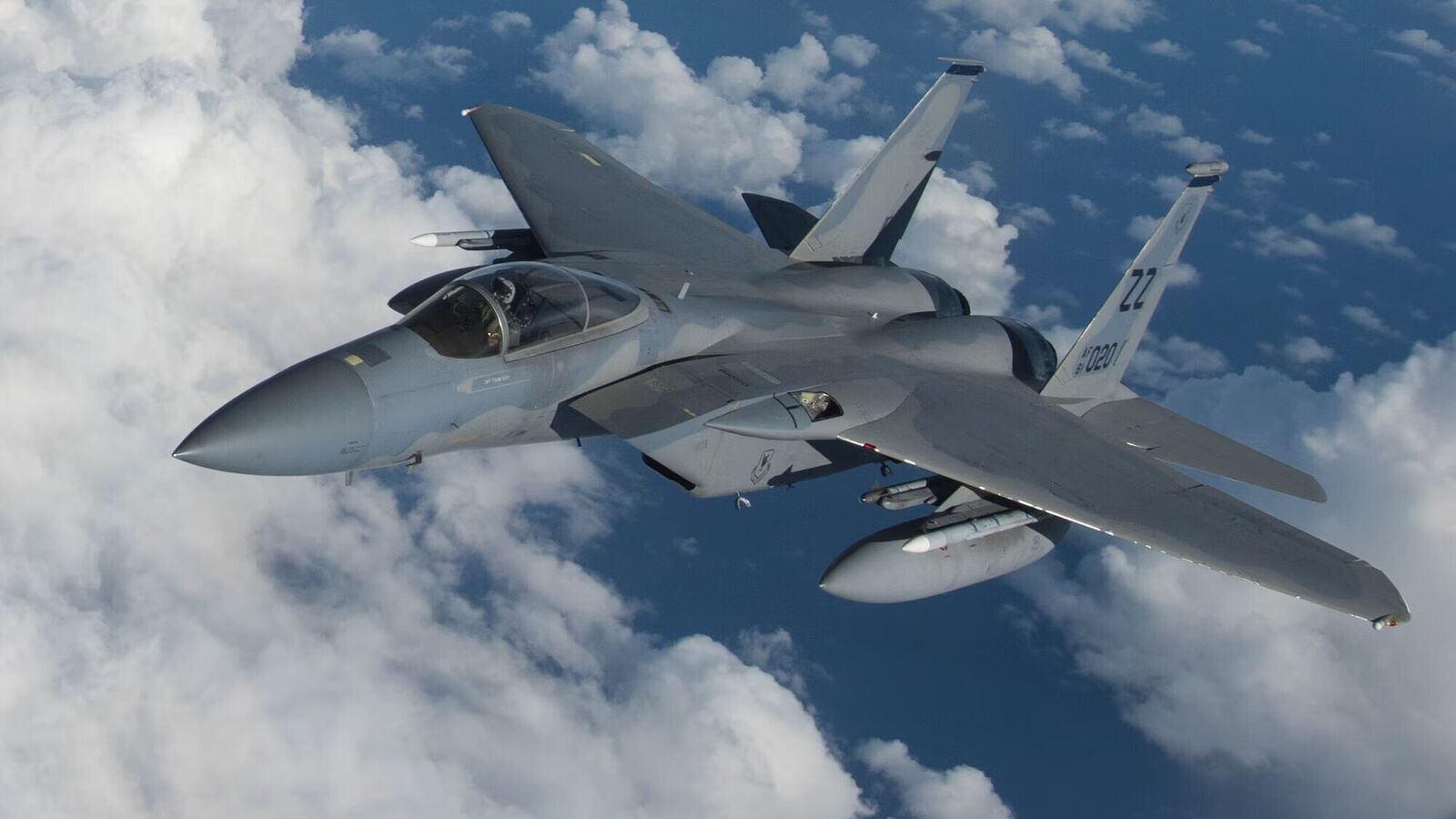
Dramatic F-15 Video Crash: Pilot Ejects Safely Amidst Middle East Tensions
In a moment that underscored the volatile geopolitical landscape of the Middle East, the internet was recently gripped by a dramatic f-15 video crash that captured the harrowing final seconds of a US Air Force F-15 fighter jet in Kuwait. The shocking footage, widely circulated on social media, shows the aircraft hurtling towards the ground, trailing smoke, with at least one pilot seen ejecting just moments before impact. Miraculously, the pilot survived the ordeal, a testament to modern aviation safety systems and immediate local response.
This incident unfolded against a backdrop of escalating conflict and heightened anxieties in the region, following significant US-Israeli military operations and stark warnings from former President Donald Trump regarding potential American casualties. The dramatic visual of the F-15's demise, coupled with the geopolitical context, immediately sparked widespread discussion and concern.
Witnessing the Dramatic F-15 Video Crash and Pilot's Miraculous Escape
The viral video footage, capturing the intense f-15 video crash, is a stark reminder of the inherent risks associated with military aviation, particularly in active operational zones. Viewers watched in awe and apprehension as the F-15, a formidable symbol of American air power, descended rapidly. The most critical and heartening part of the video, however, was the clear visual of the pilot's ejection capsule separating from the ailing aircraft, deploying its parachute against the desert sky.
Following the crash, initial reports and subsequent video clips quickly confirmed that the airman had survived. The pilot was reportedly seen receiving aid from local citizens, highlighting the immediate human response to such a catastrophic event. This successful ejection is not merely a stroke of luck but a direct result of advanced engineering, rigorous pilot training, and the sophisticated emergency systems built into modern fighter jets.
The Science of Survival: Understanding Pilot Ejection Systems
The successful ejection of the F-15 pilot is a remarkable feat of engineering and human resilience. Ejection seats, such as those manufactured by companies like Martin-Baker, are complex, pyrotechnically operated systems designed to propel a pilot safely away from a crippled aircraft at high speed and altitude. Here are some key facts about these life-saving devices:
- Speed and Force: Ejection seats use powerful rocket motors to launch the pilot clear of the aircraft within fractions of a second, often subjecting them to immense G-forces.
- Automated Sequence: Once activated, the system initiates a rapid sequence: canopy jettison, seat propulsion, and then the deployment of a drogue chute followed by the main parachute.
- Survival Kits: Modern ejection seats are integrated with survival kits containing essential items like rafts, flares, water, and first-aid supplies to aid the pilot's survival on the ground or at sea until rescue.
- Continuous Improvement: The technology is constantly refined, aiming for "zero-zero" capability, meaning a pilot can eject safely even at zero altitude and zero airspeed.
The fact that the F-15 pilot walked away from this incident speaks volumes about the continuous advancements in aviation safety and the intense training pilots undergo to handle such emergencies.
Navigating a Volatile Region: The Geopolitical Backdrop to the F-15 Crash
The dramatic f-15 video crash did not occur in a vacuum. It was a singular event amidst a swirling storm of escalating tensions across the Middle East. The incident in Kuwait came shortly after significant military actions in the region, specifically US-Israeli strikes on Iran, codenamed Operation Epic Fury, which reportedly resulted in the death of Ayatollah Khamenei and multiple regime officials.
This period saw former President Donald Trump issue stark warnings, predicting "more" American deaths in the Middle East. His comments followed the confirmation of three servicemen losing their lives and five others wounded in separate incidents. Trump's six-minute video address, posted on social media, lauded the fallen as "true American patriots" but grimly added, "Sadly, there will likely be more, before it ends. That’s the way it is. Likely be more.”
The broader regional instability included:
- Iranian Retaliation: Iran had vowed severe retaliation against the U.S. and Israel, with reports of over 200 deaths and 700 injuries in Iran, according to the Red Crescent aid agency.
- Spreading Conflict: Nine deaths were reported in Israel, and four across the UAE, Kuwait, Qatar, Bahrain, and Oman.
- Hezbollah Strikes: Israel began strikes on Lebanon after Hezbollah launched retaliatory actions, with intelligence suggesting the death of Hezbollah's political leader, Mohammad Raad.
- RAF Akrotiri Incident: An explosion at an RAF air base in Cyprus, attributed to an "unmanned drone," caused limited damage but thankfully no casualties, further illustrating the widespread nature of the conflict.
While the direct cause of the F-15 crash is under investigation, its occurrence during such a highly charged period inevitably led to speculation and amplified concerns about regional stability and military operations.
Unraveling the Mystery: What Caused the F-15 Video Crash?
Immediately after the f-15 video crash, the focus shifted to understanding its cause. Early, unconfirmed reports described the incident as "friendly fire," a terrifying prospect that underscores the chaos and danger inherent in complex military operations. However, the US Air Force has yet to confirm the exact circumstances of the crash, stating that the cause is under investigation.
Kuwait's defense ministry, while confirming the crash of "several" US warplanes and the survival of all crew members, also noted that the cause was under investigation. This discrepancy in reporting (one vs. several F-15s) is common in the immediate aftermath of such events, where information is often fragmented and rapidly evolving.
Military aviation investigations are meticulous and lengthy processes. They typically involve:
- On-Site Analysis: Teams collect wreckage, flight recorders, and other physical evidence from the crash site.
- Witness Interviews: Ground personnel, fellow pilots, and any other witnesses are interviewed to gather perspectives.
- Maintenance Records Review: The aircraft's entire maintenance history is scrutinized for any anomalies or overlooked issues.
- Pilot Background: The pilot's training, flight hours, and medical history are reviewed.
- Environmental Factors: Weather conditions, bird strikes, and other external factors are considered.
Until the official findings are released, speculation will continue. The absence of confirmed hostile action points towards potential mechanical failure, pilot error, or unforeseen environmental factors. Each possibility carries significant implications for future operational protocols and aircraft maintenance.
The Broader Implications: Aviation Safety and Regional Stability
The f-15 video crash serves as a poignant reminder of the constant risks faced by military personnel and the critical importance of robust aviation safety protocols. Even with advanced technology and highly trained personnel, accidents can and do happen. Each incident, especially involving a frontline fighter jet like the F-15, triggers a comprehensive review process aimed at preventing future occurrences.
A Look at the F-15 Eagle's Legacy and Reliability
The F-15 Eagle, developed by McDonnell Douglas (now Boeing), has been a cornerstone of American air superiority for decades. Renowned for its speed, maneuverability, and combat record, it has an impressive safety record given its operational intensity. The F-15 is celebrated for:
- Air Superiority: Designed primarily as an air-to-air fighter, it has achieved over 100 aerial combat victories with no losses.
- Long Service Life: First introduced in 1976, it continues to be a vital asset, undergoing numerous upgrades and modifications.
- Proven Reliability: Its robust design and maintenance protocols contribute to its generally high operational readiness rates.
Therefore, any crash involving an F-15 is taken extremely seriously, as it represents a rare failure in a system designed for maximum reliability. The ongoing investigation will undoubtedly yield valuable insights, not just for the US Air Force but potentially for other nations operating similar aircraft.
The incident also subtly influences regional stability. While the pilot's survival averted a potential tragedy of greater scale, the crash itself, set against the backdrop of an already tense Middle East, adds another layer of complexity. It underscores the fragility of peace and the ever-present dangers for military forces operating in contested territories. The global community watches closely, not just for the outcome of the investigation, but for how such events may shape future diplomatic and military strategies in a region perpetually on edge.
Conclusion
The dramatic f-15 video crash in Kuwait, culminating in the pilot's successful ejection and survival, stands as a testament to both the inherent dangers of military aviation and the triumphs of human ingenuity and resilience. While the footage was alarming, the miraculous escape of the pilot provided a crucial silver lining. The incident's occurrence amidst heightened Middle East tensions, following significant military operations and stark warnings from political leaders, firmly placed it within a broader, complex narrative of regional instability. As investigations continue to determine the exact cause of the crash, the focus remains on ensuring the safety of military personnel and upholding the meticulous standards of aviation safety, even as the geopolitical landscape remains ever-challenging.