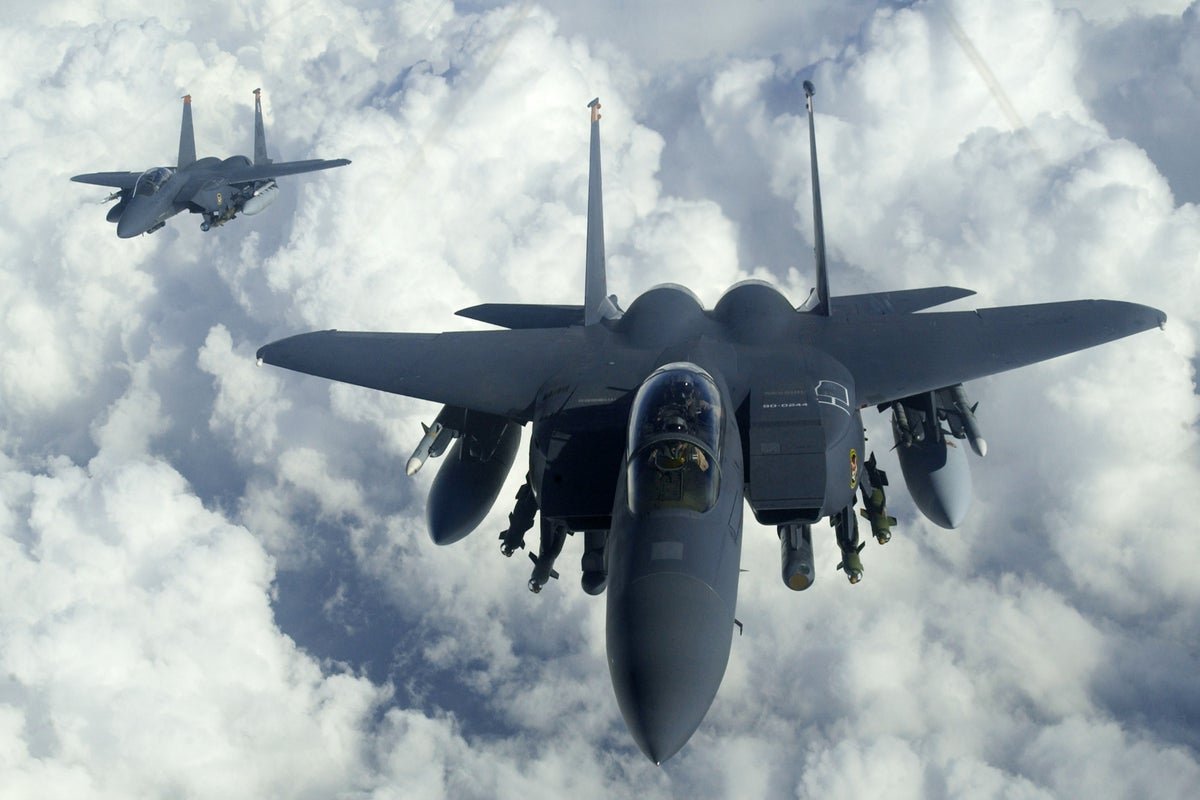
The Dramatic F-15 Video Crash: A Close Call in Kuwait Amidst Regional Volatility
In a recent incident that sent ripples across global news outlets, a US Air Force F-15 fighter jet crashed in Kuwait, capturing the world's attention not only for the event itself but for the dramatic video footage that swiftly circulated online. The dramatic video showed the pilot successfully ejecting mere moments before impact, a testament to modern aviation safety protocols and the swift action of the airman. This harrowing event occurred against a backdrop of escalating geopolitical tensions in the Middle East, adding a layer of urgency and concern to the accident.
The f-15 video crash footage, widely shared across social media platforms, depicted the formidable aircraft spiraling downwards, trailing smoke, before violently striking the ground. Critically, the video clearly showed at least one pilot deploying their ejection seat, a parachute blossoming open, allowing for a safe descent. Early reports and subsequent video clips confirmed the pilot's survival, showing the airman receiving immediate assistance from local citizens and emergency responders. While initial reports from Kuwait's Defence Ministry mentioned "several" US warplanes crashing, broader international reporting and detailed footage predominantly focused on a singular F-15 incident, with all crew members reported safe.
Unraveling the Mystery: What Caused the F-15 Crash?
As is standard procedure for military aircraft accidents, an official investigation is now underway to determine the exact circumstances leading to the F-15's demise. The cause of the crash remains unknown, with officials refraining from speculation. However, in the immediate aftermath, rumors of "friendly fire" briefly surfaced, though these have not been confirmed by the US Air Force.
Investigating a modern fighter jet crash is a complex and painstaking process that often takes months. Teams of experts will meticulously examine every piece of recovered wreckage, flight recorders (the military equivalent of "black boxes"), maintenance logs, and air traffic control communications. Potential causes range widely and typically include:
- Mechanical Failure: This could involve engine issues, structural fatigue, or systems malfunction that renders the aircraft uncontrollable. Given the F-15's advanced age (first flown in the 1970s, though continually upgraded), maintenance and component fatigue are always considerations.
- Pilot Error: While highly trained, pilots can make errors, especially under extreme stress or during complex maneuvers. However, the successful ejection suggests the pilot maintained enough situational awareness to initiate the emergency procedure.
- External Factors: Environmental elements like severe weather, bird strikes (even at high altitudes), or even unanticipated airspace interference could contribute to an incident.
- Maintenance Issues: Even with rigorous protocols, human error in maintenance or undetected flaws can lead to catastrophic failures.
The F-15 Eagle is renowned for its exceptional safety record and robust design, making such an incident relatively rare. This fact only underscores the importance of a thorough investigation to prevent future occurrences and ensure the continued reliability of these critical assets.
Geopolitical Backdrop: Tensions in the Middle East
The crash did not occur in a vacuum; it unfolded amidst a severely heightened state of tension across the Middle East. This incident coincided with a period of escalating conflict following US-Israeli strikes on Iran, an operation reportedly codenamed "Epic Fury." These strikes, which allegedly resulted in the deaths of Ayatollah Khamenei and multiple Iranian regime officials, drew strong condemnation and vows of "severe retaliation" from Iran.
The regional instability was further underscored by stark warnings from former US President Donald Trump, who spoke of "more American deaths" in the Middle East. His statements came after the tragic loss of three servicemen and injuries to five others, described as "true American patriots" making "the ultimate sacrifice." Trump's rhetoric highlighted the perilous nature of US military engagements in the region, asserting that "there will likely be more, before it ends."
Beyond the US-Iran confrontation, the wider region was experiencing a significant uptick in hostilities:
- Reports indicated over 200 deaths and 700 injuries in Iran, according to the Red Crescent, alongside fatalities in Israel, UAE, Kuwait, Qatar, Bahrain, and Oman.
- Hezbollah launched retaliatory strikes against Israel, following reports of its political leader, Mohammad Raad, being killed in an Israeli airstrike.
- An explosion at an RAF air base in Cyprus, attributed to an "unmanned drone," caused limited damage but no casualties, signaling the broad reach of current conflicts.
The F-15 crash, therefore, becomes more than just an aviation accident; it's a stark reminder of the volatile operational environment US forces navigate daily in a region teetering on the brink. The incident naturally fuels Mideast tensions, regardless of its ultimate cause.
The F-15 Eagle: A Legacy of Air Superiority and Safety Protocols
The McDonnell Douglas (now Boeing) F-15 Eagle has been a cornerstone of American air power since the 1970s, renowned globally as one of the most successful fighter aircraft ever built. Designed primarily for air superiority, it has an unparalleled combat record, with over 100 aerial victories and no confirmed losses to enemy aircraft. Its robust twin-engine design, powerful radar, and advanced avionics have ensured its relevance for decades, with various upgraded variants still in active service.
The survivability of the pilot in this recent f-15 video crash underscores the efficacy of modern ejection systems. Developed by companies like Martin-Baker, these advanced ejection seats are designed to propel a pilot safely away from a rapidly failing aircraft under extreme conditions, including zero-altitude and zero-speed scenarios. Key elements contributing to pilot survivability include:
- Automated Sequences: Modern ejection seats initiate a complex, rapid sequence including canopy jettison, seat propulsion, stabilization, and parachute deployment, all within fractions of a second.
- Crew Training: US Air Force pilots undergo rigorous and continuous training, not just in flying complex maneuvers but also in emergency procedures, including simulated ejections. Their ability to react decisively in a crisis is paramount.
- Personal Protective Equipment: Pilots wear specialized suits, helmets, and harnesses designed to protect them during high-G maneuvers and the violence of an ejection.
- Search and Rescue (SAR): The rapid deployment of SAR teams, often in coordination with local authorities as seen in Kuwait, is crucial for timely recovery and medical attention for ejected aircrew.
While the F-15 is a marvel of engineering, any complex machinery can fail. The US military maintains stringent maintenance schedules and employs highly skilled technicians to ensure these aircraft operate at peak performance. Every incident, even one with a successful pilot ejection, provides invaluable data for continuous improvement in aircraft design, maintenance protocols, and pilot training.
Aftermath and Future Implications
The immediate aftermath of the crash saw prompt action from both US military personnel and Kuwaiti authorities. The successful rescue and medical evaluation of the pilot(s) highlight effective coordination between allied forces and the host nation. While the physical damage is confined to the lost aircraft, the psychological impact on military personnel, particularly those involved in similar missions, is significant.
The ongoing investigation will aim to provide clarity, not only to the US Air Force but also to the wider public and allies in the region. Understanding the cause is vital for maintaining trust and confidence in military operations. In a region where every military movement and incident is scrutinized, transparency, once the facts are established, will be crucial.
This f-15 video crash serves as a stark reminder of the inherent risks associated with military aviation, especially when operating in a volatile geopolitical climate. It reinforces the need for continued vigilance, advanced safety measures, and robust international cooperation to ensure the security of personnel and the stability of global operations. As the Middle East continues to navigate a period of profound change, the ability of military forces to operate safely and effectively remains a critical component of regional stability and international relations.